Choosing a Rotational Molding Mold Type
In rotational molding, there is no single “one correct” mold type. The same product can be made with a sheet-metal mold, a cast-aluminum mold, or a billet-machined structure, depending on the project goals. The right choice is made by evaluating not only the part shape, but also the investment budget, expected mold life, the likelihood of revisions, surface quality needs, and the production setup together.
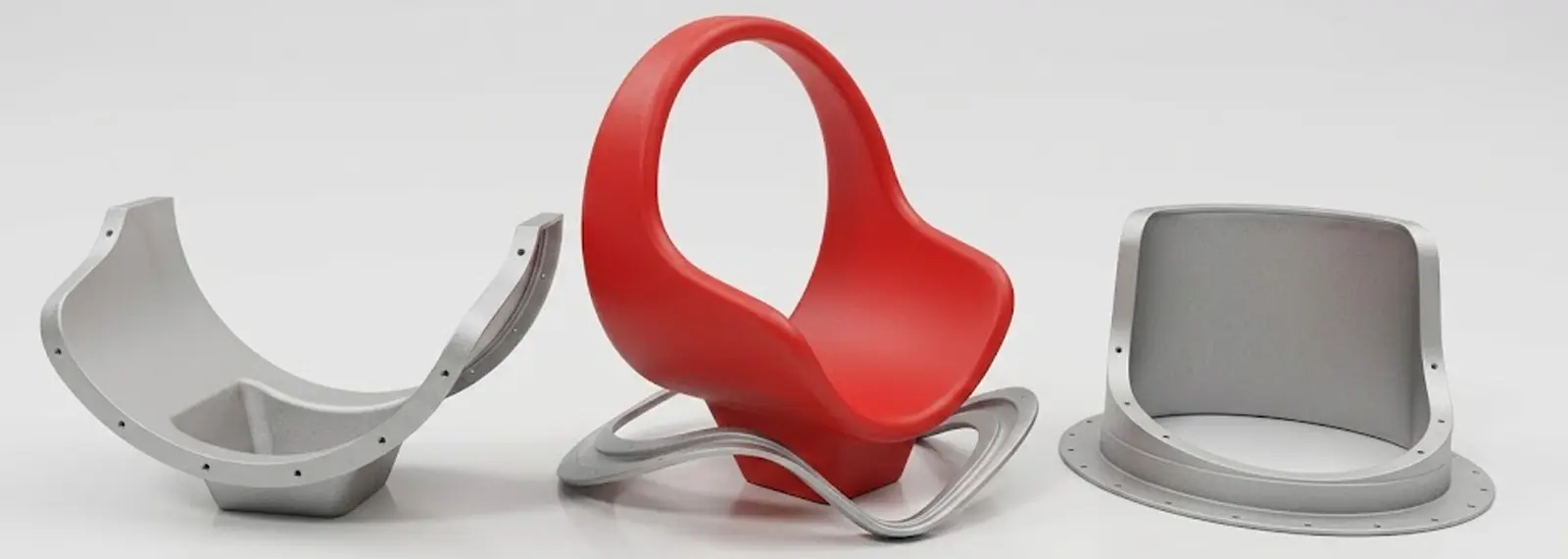
When selecting a mold approach, most projects should first clarify these questions:
- How does the product size affect which mold type makes the most sense?
- What is the level of geometric complexity?
- How important are surface quality and dimensional accuracy?
- What are the investment budget and the target production volume?
- Since the project may still be evolving, is the risk of revisions high?
Sheet-Metal Mold
In a sheet-metal mold, the form is created piece by piece through cutting, bending, rolling, welding, and similar fabrication operations. This method is often the most sound engineering solution for large-volume, geometrically simple parts.
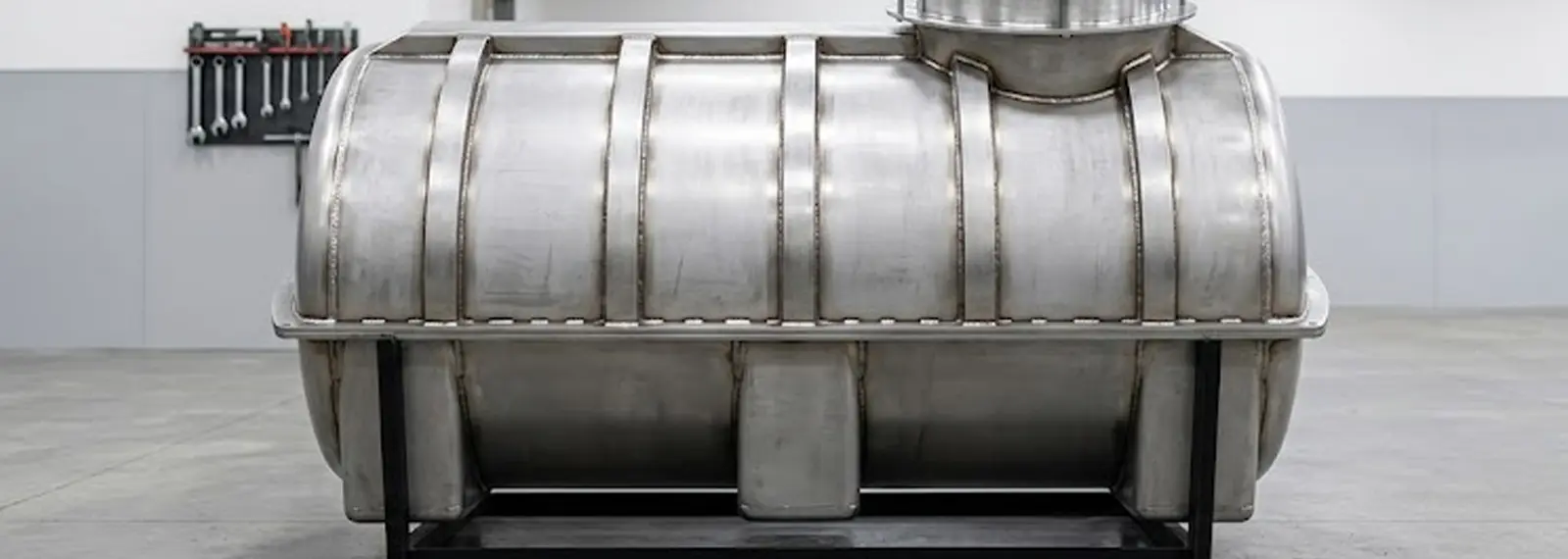
- Sheet-metal mold making relies heavily on manual workmanship. For this reason, dimensional accuracy, geometric correctness, and surface quality are more limited.
- It is low-cost and the build time is short.
- It is revision-friendly. Cutting, adding, and local modifications can be applied relatively easily.
- It is commonly preferred for large tanks, reservoirs, lids, and protective housings.
Cast-Aluminum Mold
In a cast-aluminum mold, the mold pattern is prepared first; then the aluminum mold is cast using that pattern. This method includes many sub-approaches. The pattern can be made directly or through an intermediate model. The pattern material, the amount of CNC finishing after casting, and whether seating areas and surfaces are finalized by hand work or by machining vary depending on the application.
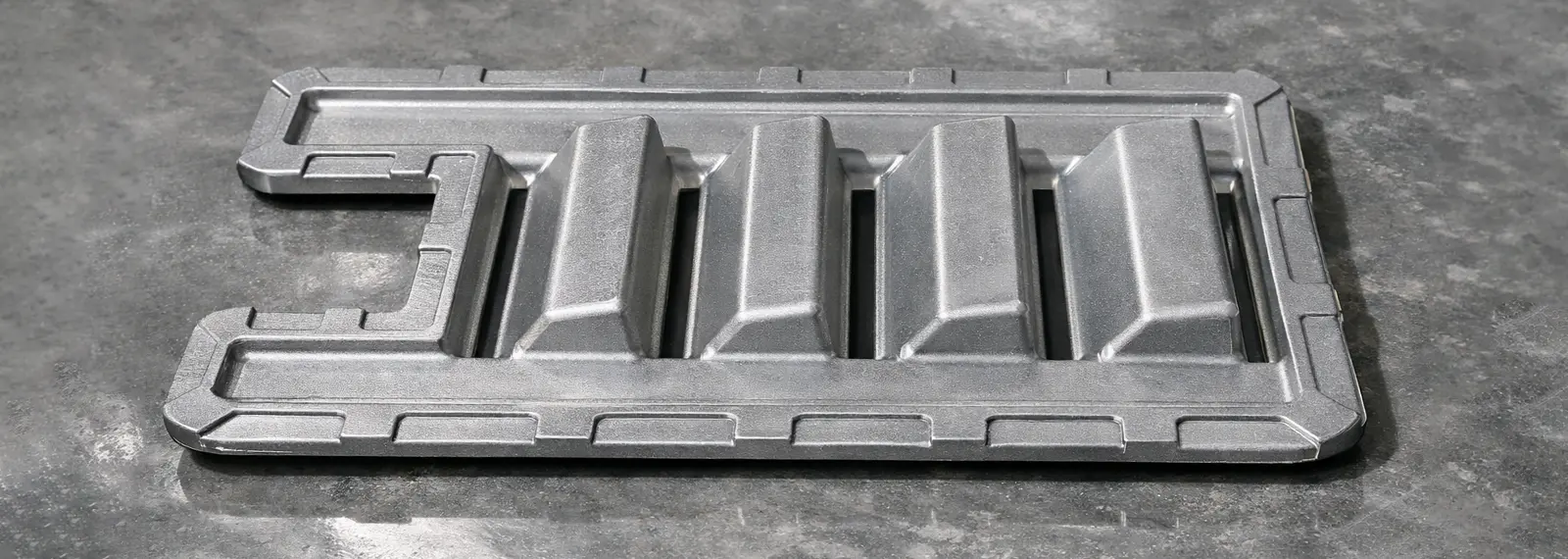
- It offers an advantage for multi-directional and curved geometries that are difficult to produce with bending and welding.
- Initial cost and lead time are typically higher than sheet-metal molds. However, if multiple molds are produced from the same pattern, the process becomes significantly faster and the unit mold cost decreases.
- Revisions are possible, but usually not as easy and inexpensive as with sheet-metal molds. Therefore, a more mature design is preferred.
- Because it has many sub-types, defining the right approach requires strong experience, technical competence, and careful process planning.
Billet-Machined Aluminum Mold
This approach does not require pattern and casting stages. The geometry is created directly by machining an aluminum billet using CNC and similar subtractive manufacturing methods. Dimensional accuracy, surface finish, and the correctness of seating areas depend directly on machining quality.
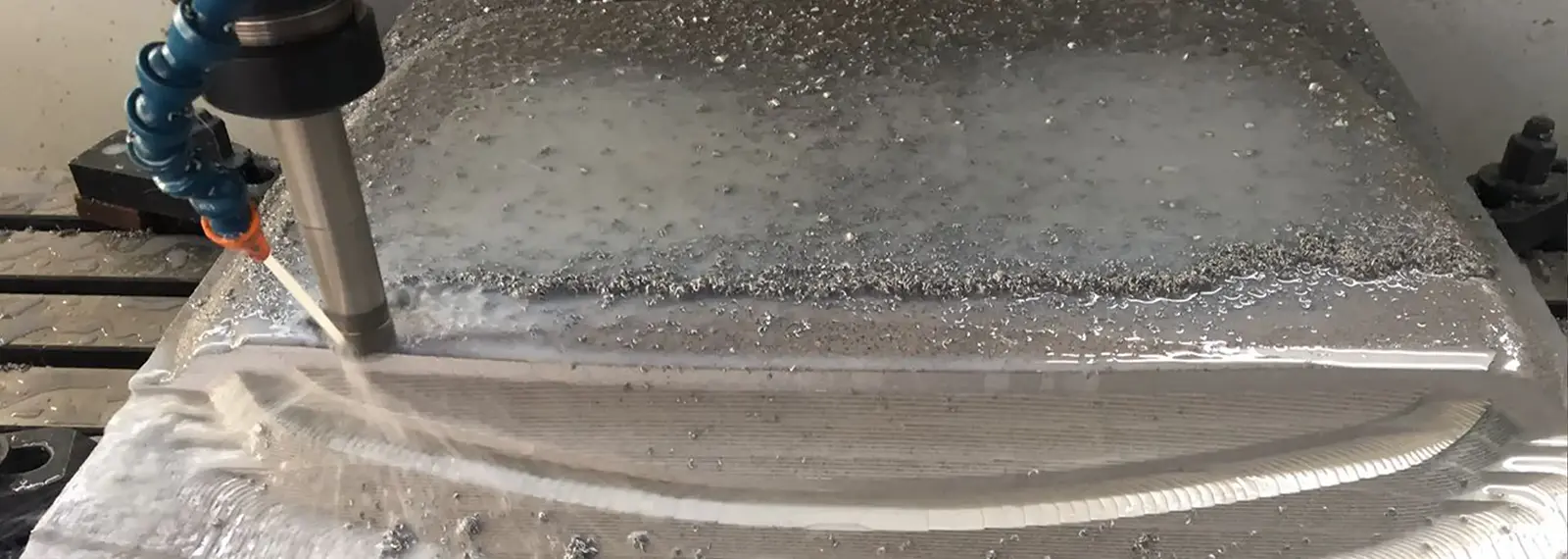
- Machining enables tight dimensional control; detail and surface control are high.
- Machining time and billet cost increase mold cost. Still, for some products designed specifically for this method, it can be the most economical mold option.
- Revisions are possible, but usually not as easy and inexpensive as with sheet-metal molds. Therefore, a more mature design is preferred.
- Since there is no risk of casting voids, it yields more predictable results in surface operations such as acid etching, sandblasting, and similar treatments.
Hybrid Mold
In a hybrid mold, different mold-making methods are used together on the same mold. While large and simple regions are handled with one method, areas that require precision, detail, or critical seating surfaces can be made with another. In this way, each region is produced with the method that best matches its technical needs.
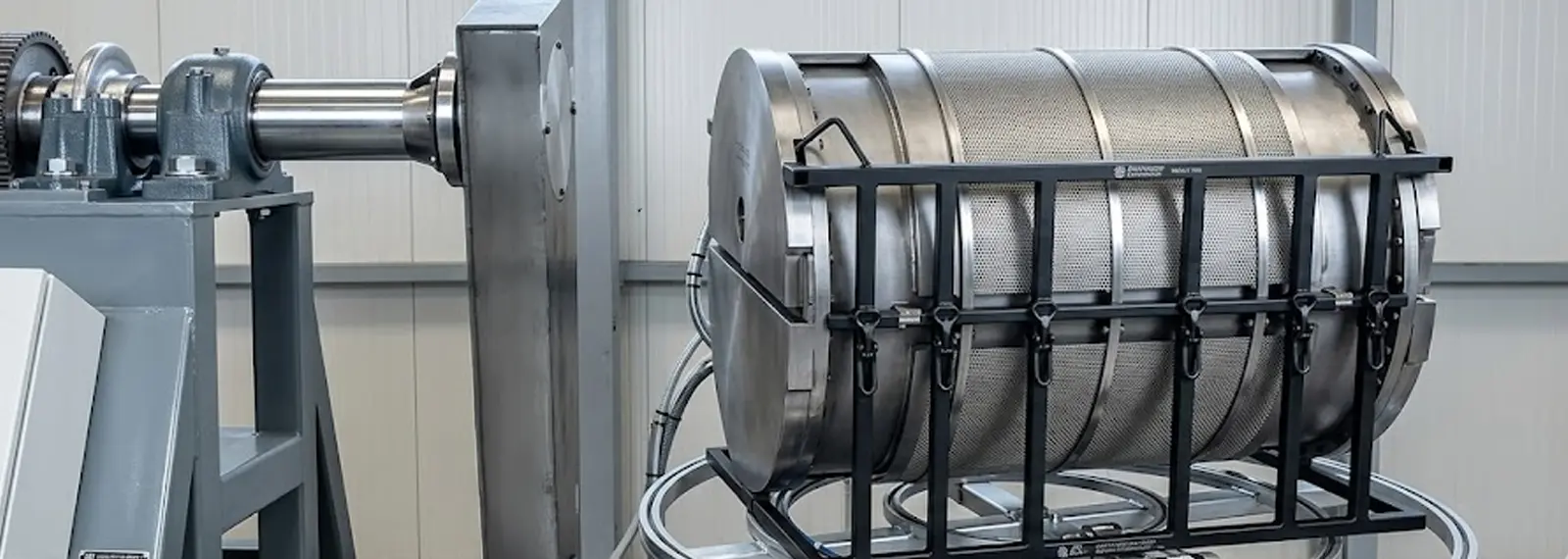
- Combining different materials and manufacturing methods to work together on the same mold requires careful engineering and experience in both design and manufacturing.
- Because it uses expensive methods where needed and economical methods where appropriate, it is well-suited to optimizing total mold cost.
- Since it allows modular thinking, it can provide advantages in maintenance, repair, and revision processes as the project evolves.