What Is Rotational Molding?
Rotational molding is based on the principle of coating the inner surface of a closed mold by rotating polymer material around two axes under heat, without using pressure.
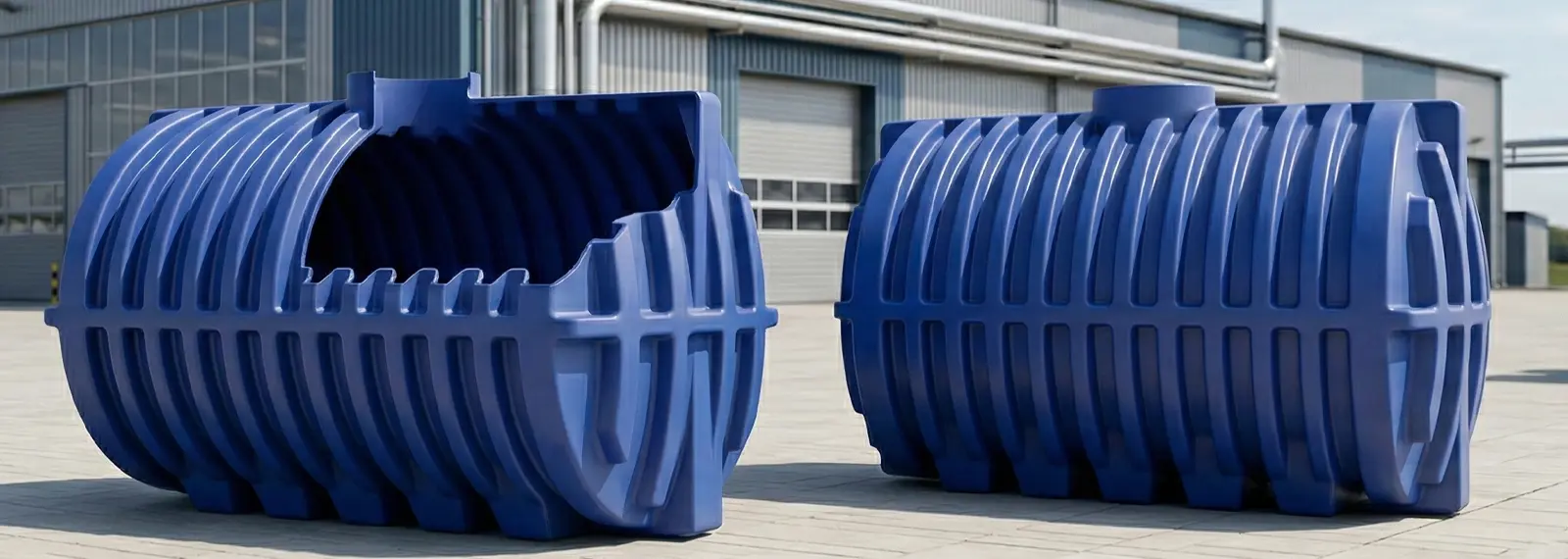
- It is a pressureless process. The material does not fill the mold; it coats the inner surface.
- The natural outcome of the process is a one-piece, hollow body.
- The part is formed in a single cycle; no post-assembly of the body is required.
- The outer surface of the product reflects the mold surface exactly. The inner surface is shaped by the resulting wall thickness.
- Wall thickness is not dictated by the mold; it is determined by the amount of material.
Rotational Molding Process
Even if machine type and line layout vary, the rotational molding process follows the same basic sequence.
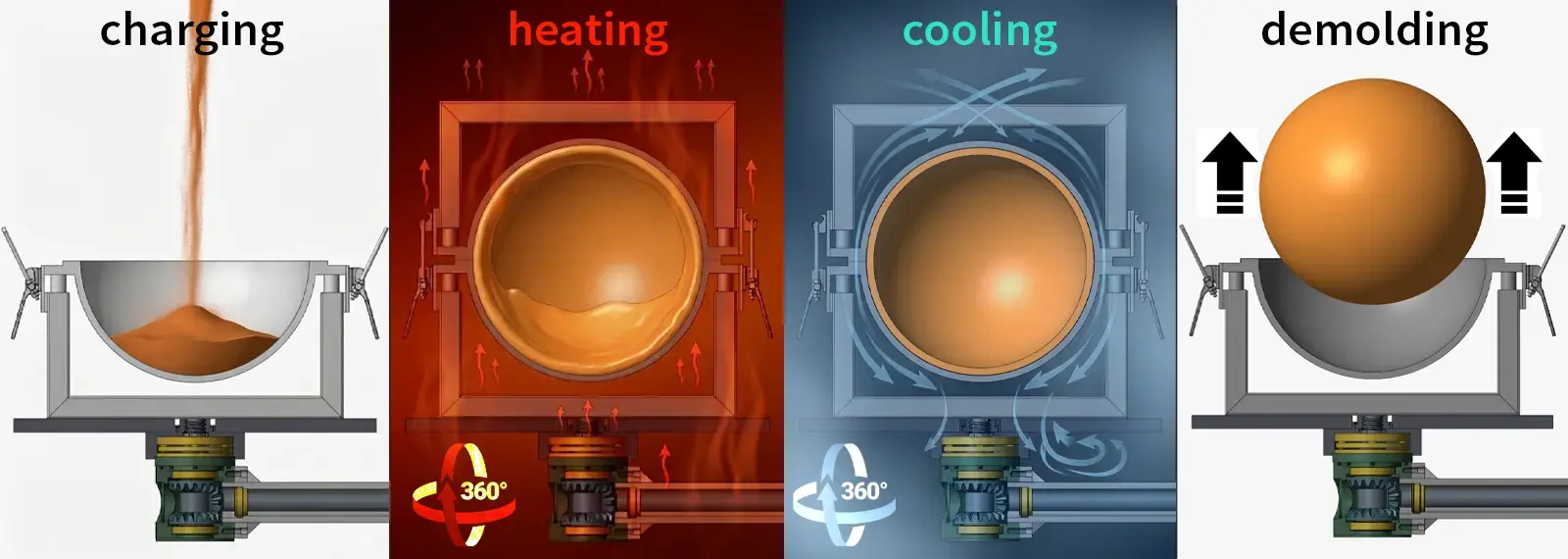
- A measured amount of material is loaded into the mold.
- During heating, the mold rotates about two axes; the material melts and starts coating the inner surface.
- Heating continues until all material melts and a continuous wall thickness is formed.
- After heating, cooling begins while rotation continues; the material solidifies and the part reaches enough rigidity to be demolded.
- The mold is opened, the part is removed, and required finishing operations are performed.
Where Is Rotational Molding Used?
Although water tanks often come to mind first, the application range goes far beyond that.
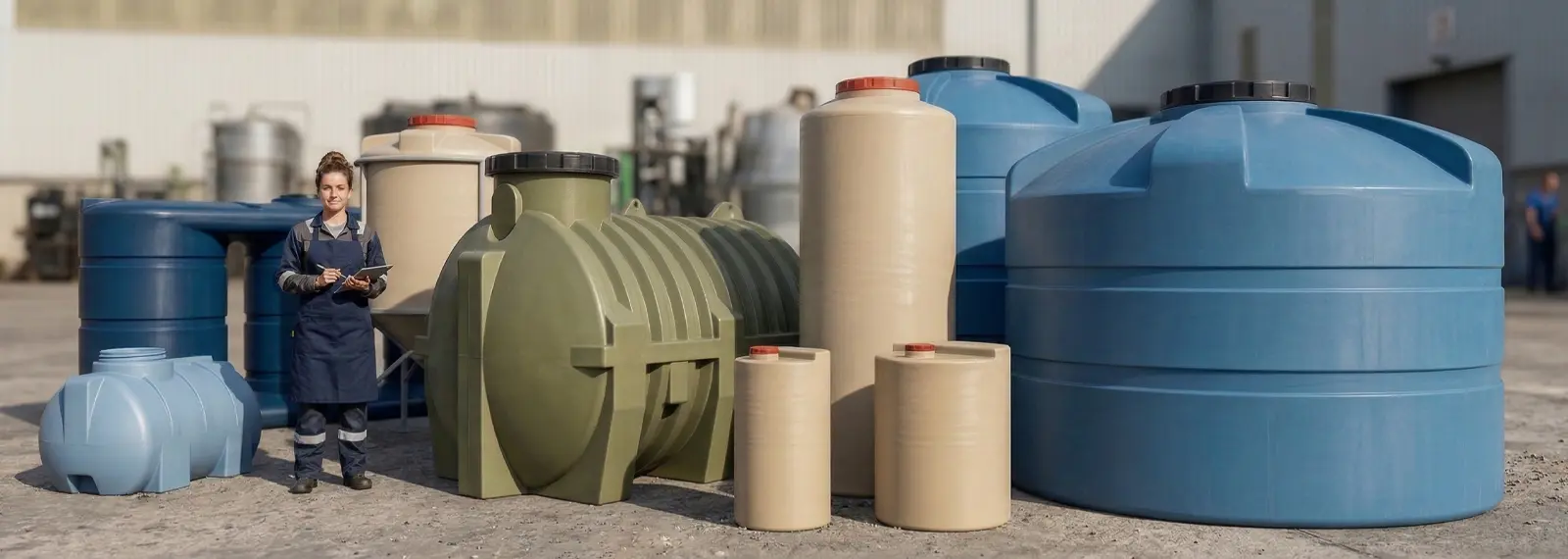
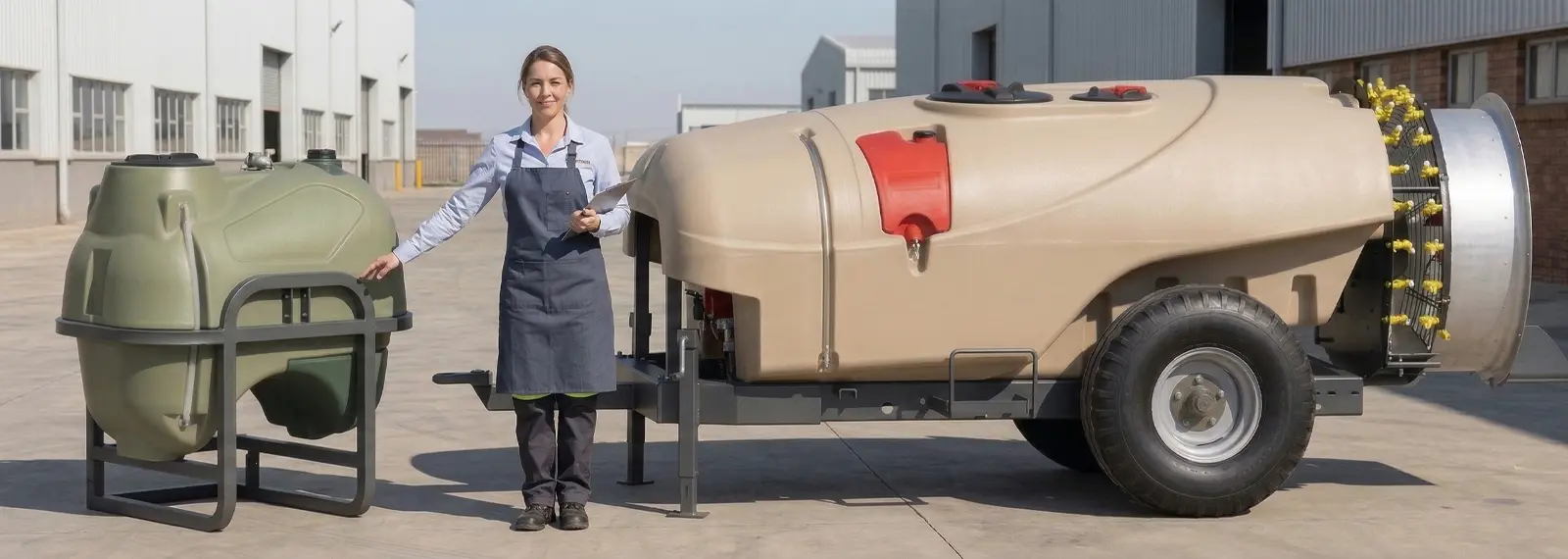

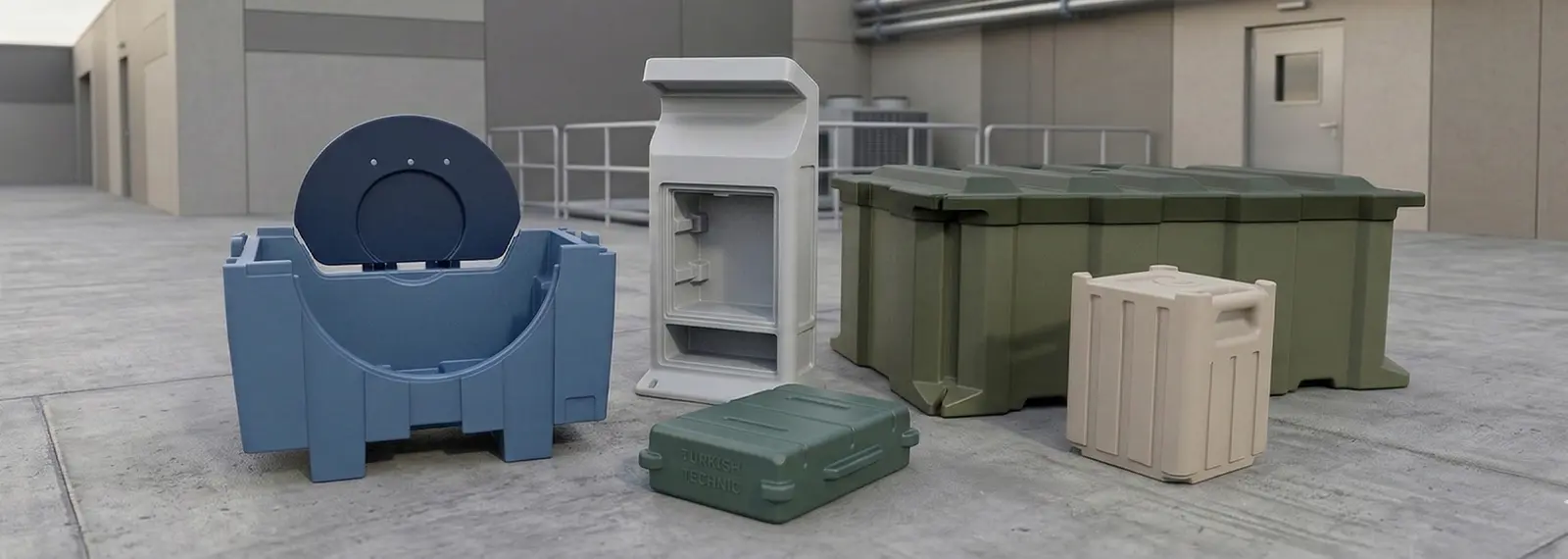

- Water and chemical storage tanks
- Agricultural tanks and field equipment
- Playground bodies and park components
- Technical enclosures, boxes, and transport cases
- Kayaks, canoes, buoys, and marine equipment
- Double-wall technical parts and specialized engineering applications
In short, when large volume + hollow structure + impact resistance + outdoor requirements come together, rotational molding often becomes a strong candidate on the table.
Rotational Molding Is More Than a Manufacturing Method
For the right part, rotational molding is not just a route to make a product; it is a system that shapes the product architecture, mold approach, wall-thickness strategy, and field durability together. If you want to clarify whether this technology is suitable for your project, we can evaluate it together.