When Should Rotational Molding Be Chosen?
Rotational molding is a very powerful solution when used for the right part with the right expectations. This guide was prepared to evaluate whether rotational molding is truly a suitable manufacturing decision, either for a new project or within an existing production or product structure.
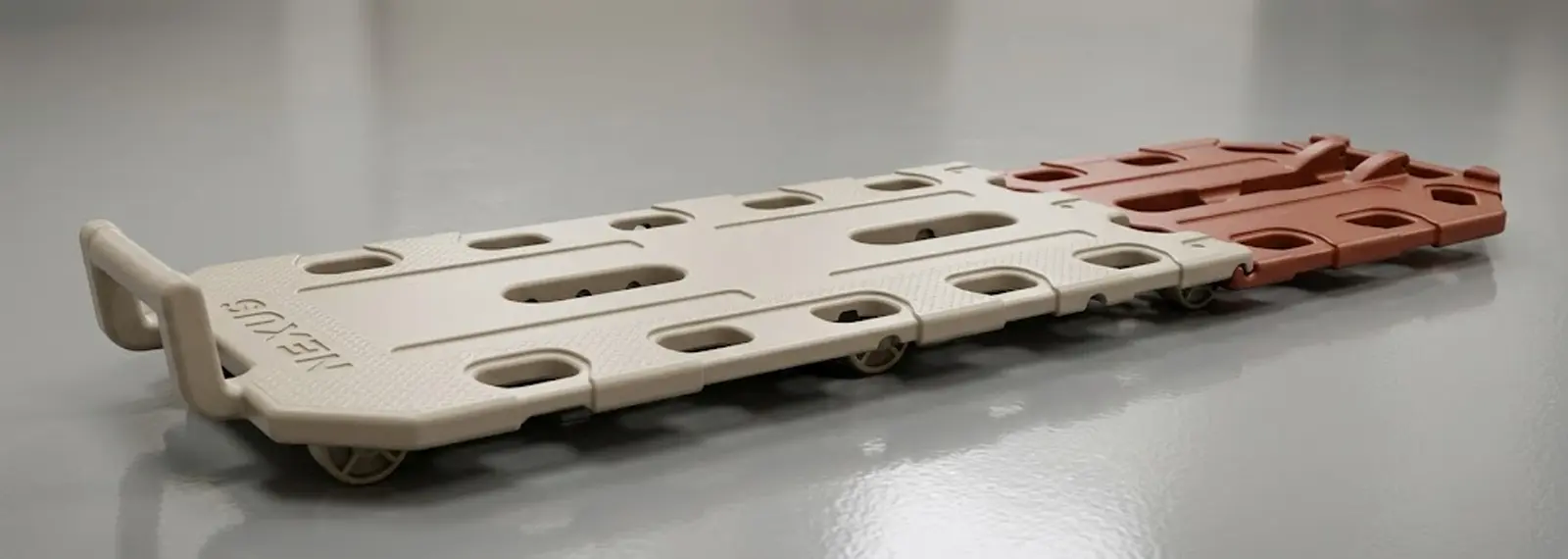
Rotational molding may be a suitable manufacturing method for your product in the following cases:
- If the product can be designed as a hollow body.
- If the part is large in volume.
- If you want to start production without reaching extremely high quantities.
- If it is important to keep mold investment costs low.
- If impact resistance is needed, or if it will work outdoors or under chemical exposure.
What Kind of Geometry Works for Rotational Molding?
Rotational molding works on the principle that a heated polymer adheres to the mold’s inner surface while rotating on two axes inside the mold. Therefore, the geometry must be designed to match the process.

- Since the material forms by rotating inside the mold, the base geometry should be designed as a hollow body.
- The outer surface of the product takes the shape of the mold’s inner surface; the inner surface forms through the material’s free distribution.
- In rotational molding, hollow parts are natural; hollow objects can be produced without cores and without extra operations.
- Single-wall products can be obtained by cutting a double-wall part or by planning local cavities directly in the mold.
- Wall thickness is independent of the mold; with the same mold, you can manufacture parts at different wall thicknesses.
Part Size and Production Quantity in Rotational Molding
Rotational molding is not suitable for very small parts in the gram range; it is typically preferred for parts ranging from a few hundred grams up to hundreds of kilograms. In terms of production volume, it is not like a fixed, massive garment factory line; it is more like a tailor that can work as serial production when needed, and as custom production when needed.
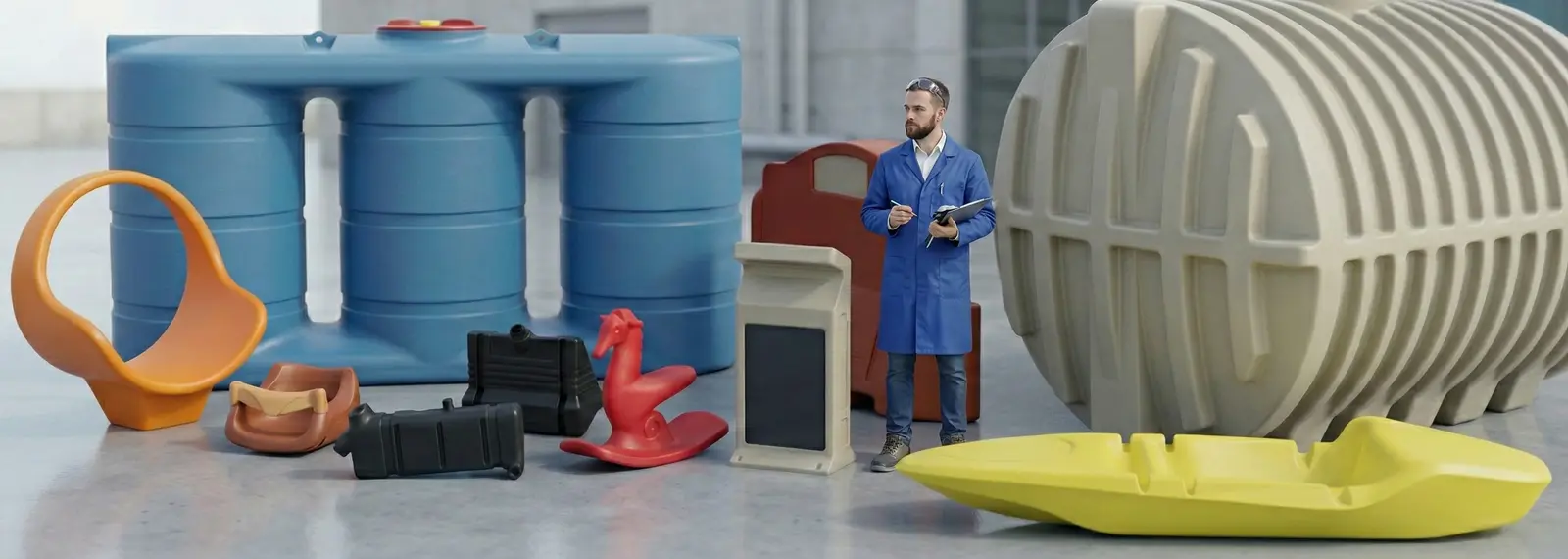
- For parts above a certain size, rotational molding is often the only feasible mass-production method.
- It can also be an economical option for relatively small-volume parts when quantities are low.
- Rotational molding is applicable both for limited-quantity jobs and for larger production volumes.
- Since wall thickness can be changed by adjusting the material amount, the same mold can produce parts with different weights (suited to different performance requirements).
- Even for low-quantity projects, different color variants can be produced economically.
Materials Used in Rotational Molding
Although rotational molding is most commonly associated with polyethylene, alternative materials can also be used when different field conditions and performance expectations are required.

- Polyethylene (PE) is the most common material for rotational molding. Thanks to high impact strength, chemical resistance, and outdoor performance, it is widely used for tanks, containers, and field equipment. Grades such as LLDPE, MDPE, and HDPE offer different stiffness and toughness balances.
- Crosslinked PE (XLPE) is preferred for applications requiring higher performance. However, it cannot be recycled, and process control is more critical.
- Polypropylene (PP) is preferred when higher temperature resistance and higher stiffness are needed.
- Polyamide (PA 6 / PA 11 / PA 12) is used when high mechanical strength is required and, in some applications, when a fuel or chemical barrier is needed. Because it is moisture-sensitive, material handling and control are important.
- Polycarbonate (PC) is preferred for special applications requiring transparency and high mechanical properties. Process control and the risk of internal defects are more critical.
- PVC (Plastisol) enables products across a wide hardness range, from flexible to semi-rigid. Process control and formulation know-how are decisive.
Initial Investment and Unit Cost
One of the strongest aspects of rotomolding is that, in many scenarios, it can keep the initial investment requirement relatively low. However, the right decision should not be based only on the initial investment; production volume, part size, unit cost, and the expected flexibility should be evaluated together.

- In many scenarios, rotomolding can keep the initial investment requirement lower than alternative processes.
- Even if the initial investment is relatively low, unit cost may remain higher than processes such as injection molding in high-volume production.
- As part size increases, the number of scenarios in which rotomolding becomes economically sensible may increase.
- Since different wall thicknesses can be produced with the same mold, the development and revision process can be managed more flexibly.
- At very high volumes, the decision should be made not only according to the initial investment, but according to the total production cost.
Is Rotational Molding the Right Decision for You?
If you are asking questions such as “Should I switch to rotational molding, is the current process right, is this part truly suitable for rotational molding,” we can clarify the picture with a technical review and a manufacturability assessment.